Smart Textiles reversibly change shape in an energy-efficient manner in response to ambient temperature
Downloads


KONTAKT

Deputy Head of Technology Center E-Textiles & Acoustics
Research Coordinator France
Self-actuating textile structures are used in a wide range of applications, such as medical technology, automation, architecture, agriculture, and the apparel industry. An example is the use of shading nets in greenhouses, which can be deployed and retracted depending on the sunlight intensity. The German Institutes of Textile and Fiber Research Denkendorf (DITF) are developing textiles based on shape-memory polymers with reversibly controllable geometry.
Changes in the shape of conventional textiles are often controlled by external mechanical components, such as motors. This increases the total weight, energy consumption, and thus also the costs.
Shape-memory polymers can respond to changes in their environment with a preprogrammed deformation. So-called 2-way shape-memory polymers (2W-SMP) even allow reversible shape changes. Textiles made from these materials open up new possibilities for developing energy-efficient textile actuators.
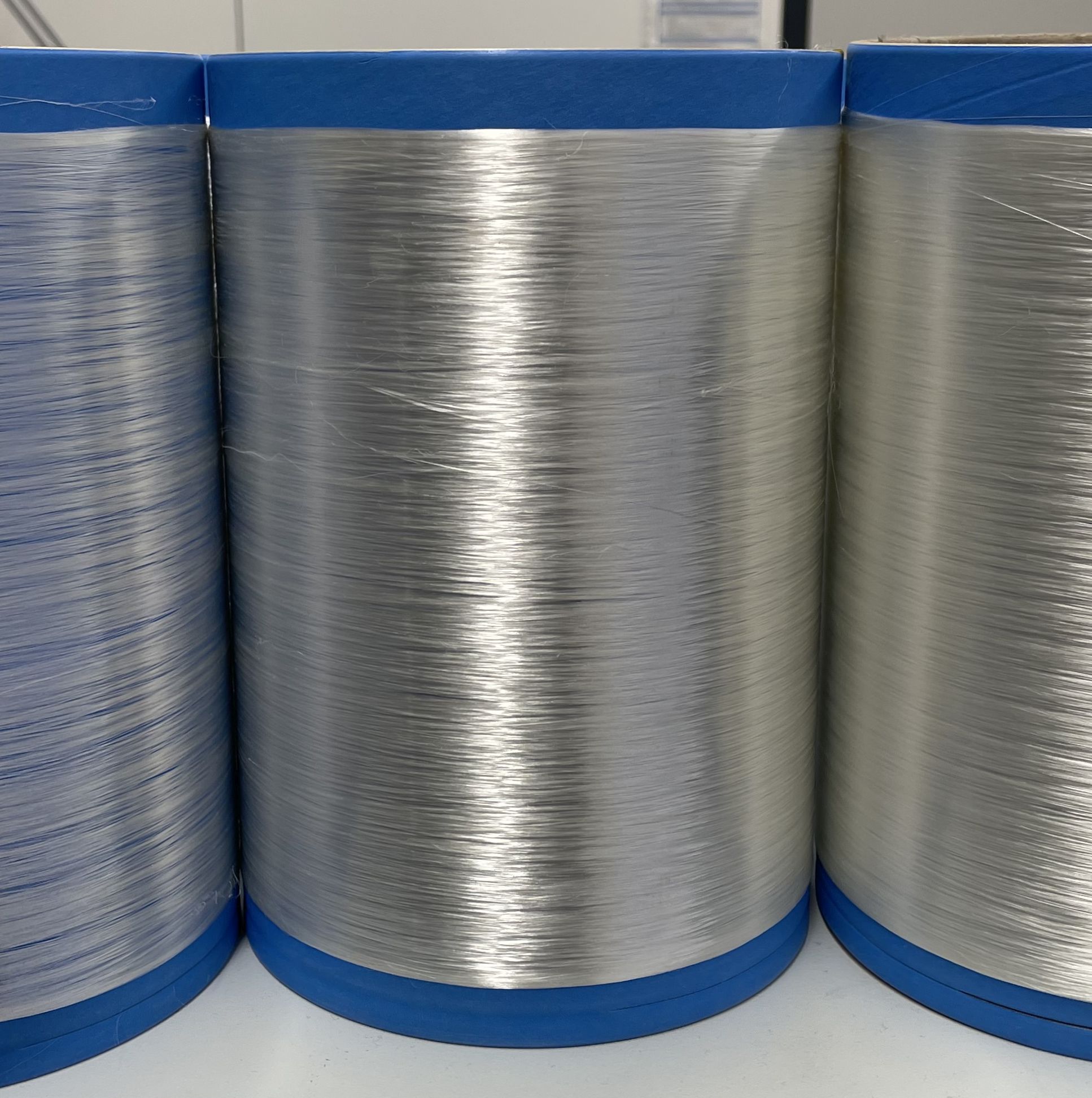
In a joint research project, the DITF, in collaboration with the Fraunhofer Institute for Applied Polymer Research (IAP), are developing multifilament yarns made from thermoplastic 2-way shape-memory polymers. These yarns exhibit a reversible and reproducible change in length that is controlled solely by temperature changes. When the temperature rises, the yarns shorten; when they are cooled, their length increases. Unlike one-way shape-memory polymers, no external deformation is required to achieve reversible shape change (actuation).
To enable the textiles to be used at room temperature, spinnable 2W-SMP fibers with transition temperatures of approximately 30 °C and 60 °C were first synthesized. Subsequently, suitable spinning parameters - such as spinning temperature, spinneret diameter, and take-up speed - were determined to enable the production of multifilament yarns, first using a Spin Line rheometer and then on a pilot plant.
Finally, the influence of the spinning parameters on the thermal actuation of the produced yarns was investigated. Therefore, their dimensional stability was determined. If the dimensional stability is 100%, the yarn returns to the same length every time the corresponding temperature is reached. Thermal actuation was also determined by the reversible change in elongation of the yarns during temperature changes. Multifilament yarns were produced with a dimensional stability of over 99% at 60°C and a reversible change in elongation of 16% at a winding speed of 1,500 m/min. This shows that these materials can be produced cost-effectively.
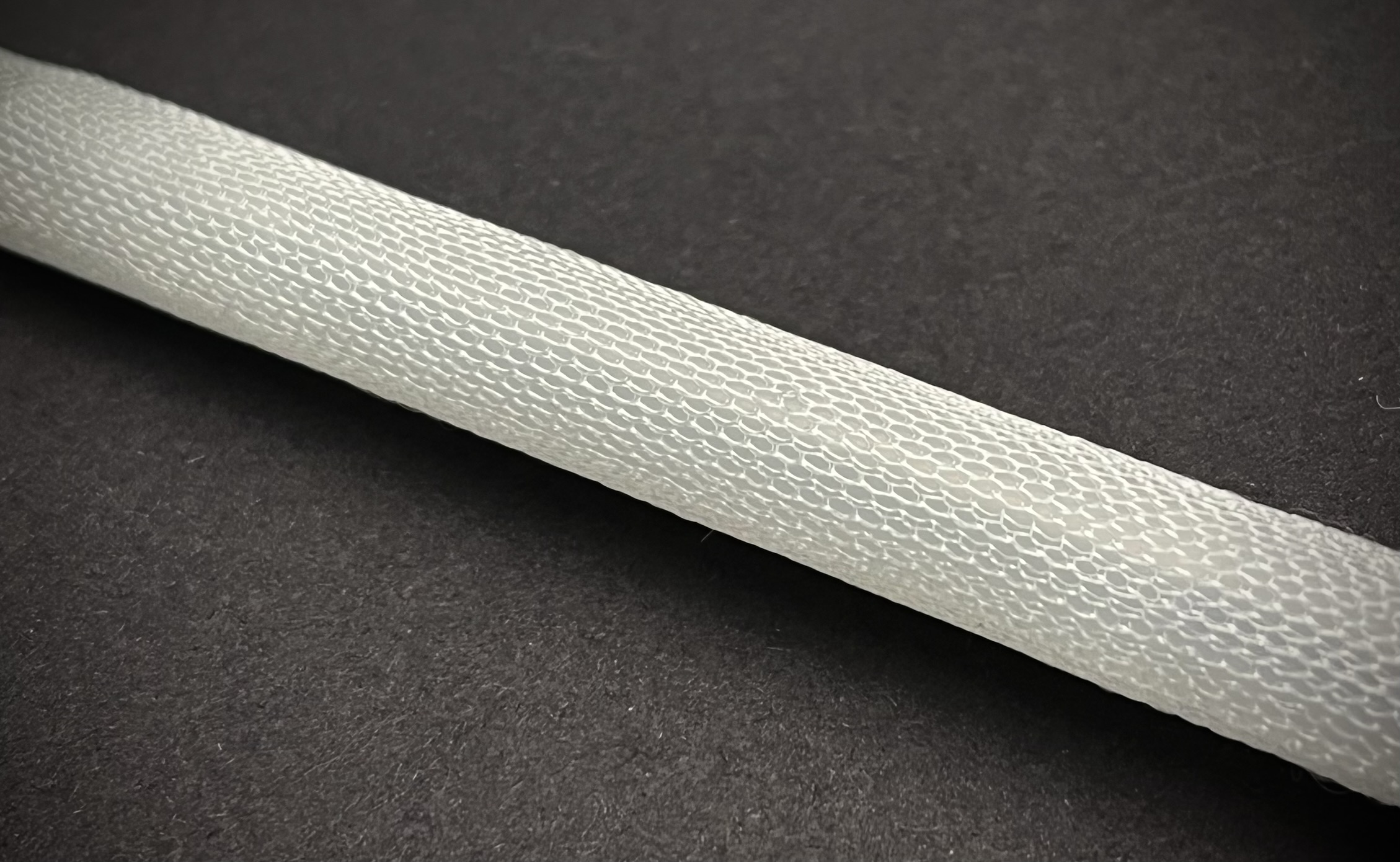
As next steps in the project, researchers will investigate how the yarns can be processed into textiles and how they can be thermomechanically recycled at the end of their service life. Based on these studies, it is possible to assess the extent to which the new material is suitable for industrial production and which applications are feasible. For example, in the future, an agricultural textile made of shape-memory polymers could be produced that automatically adjusts its air and light permeability to changing weather conditions, thereby creating an ideal environment for plant growth.
IGF Project 01IF23512 N was funded by the Federal Ministry for Economic Affairs and Energy as part of the Program for the Promotion of Joint Industrial Research (IGF), based on a resolution of the German Bundestag.